
 VINS.
VINS.
 LANGUEDOC/ROUSSILLON.
 RHÔNE.
 BOURGOGNE.
 OTHER REGIONS
 CHAMPAGNES.
 SPIRITS
Funny whisky
Ben Nevis at Fort Williams
This morning two path options.
Crapahuter on the famous Ben Nevis hiking path, the highlight of Scotland or visit the prestigious Ben Nevis distillery at the foot of the same mountain.
Given the weather, fresh wind and fine drizzle, we took the (shorter) route of the distillery for a guided tour to understand the manufacture of highland whisky.
The nice young guide with his Scottish accent, starts his presentation with the different kinds of cereals, peculiarity of Ben Nevis she distills of barley, rye but also linen, then we follow different stages of manufacture.
The malting, brewing and grinding room, and then the fermentation room (very hot room) with its large wooden tanks "washbacks" where aromas of yeast and brioche bread emerge.
Direction the room of the stills in copper, the famous Pot Still, magic of the place the distillation occurs live.
Technical point:
The distillation takes place in 2 stages. Wash (from fermentation) is transported to a large alembic the wash stills. They are equipped with portholes that control boiling.
The first distillation ends when the liquid remaining at the bottom of the wash still does not exceed 1% volume The residue called ale pot (which may represent more than 2/3 of the initial wash) is used for livestock feed.
Then comes the second stage. Low wines (low wines – obtained after condensation of alcohol vapours) are sent to a smaller alembic (spirit still) to undergo the second distillation.
The first distillate obtained is re-distilled. When the liquid no longer disturbs, one is in the presence of the future whisky, the middle cut or heat core, which averages between 68% and 72% volume Distillation ends when the liquid still present in spirit still holds less than 1% volume.
The third distillate is not preserved.
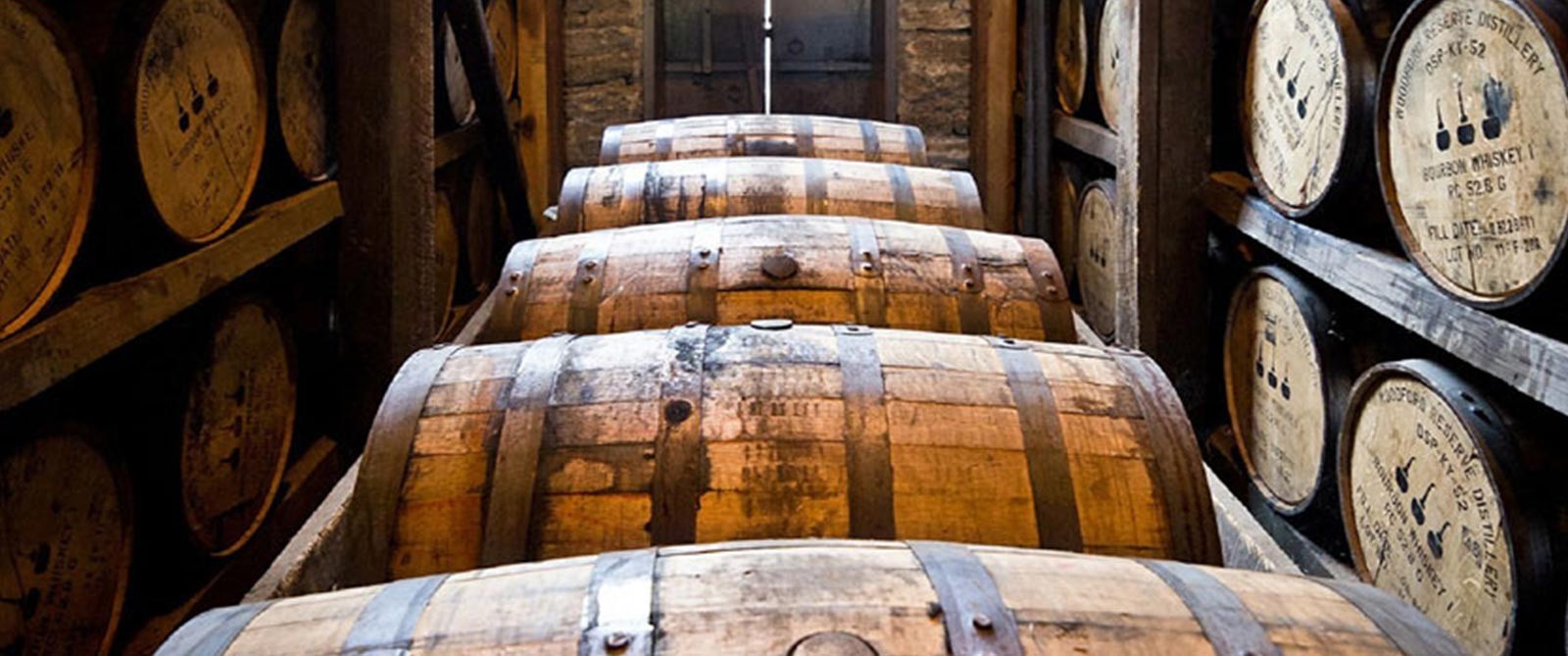
We go out to visit the barrique park serving ageing, different barrels and in particular an important stock of the coopererie François Frères in Burgundy having contained white wines.
The slow maturation of the whiskies takes place in oak barrels which may have contained Spanish finos, Porto, or bourbon "American" wooden barrels.
It should be noted that the existence of a natural reserve of pure and abundant water conditions the establishment of distilleries. It is estimated that approximately 11 litres of water and 1.4 kg of barley are required to produce a bottle of whisky.
At the end of the visit our guide offers us to come and taste the result, their traditional Nevis Dew "Special Reserve" blend 40% volume, surprising by its sweetness and balance in the final.
Really very feminine.