
 VINS.
VINS.
 LANGUEDOC/ROUSSILLON.

 RHÔNE.
 BOURGOGNE.
 OTHER REGIONS
 CHAMPAGNES.
 SPIRITS
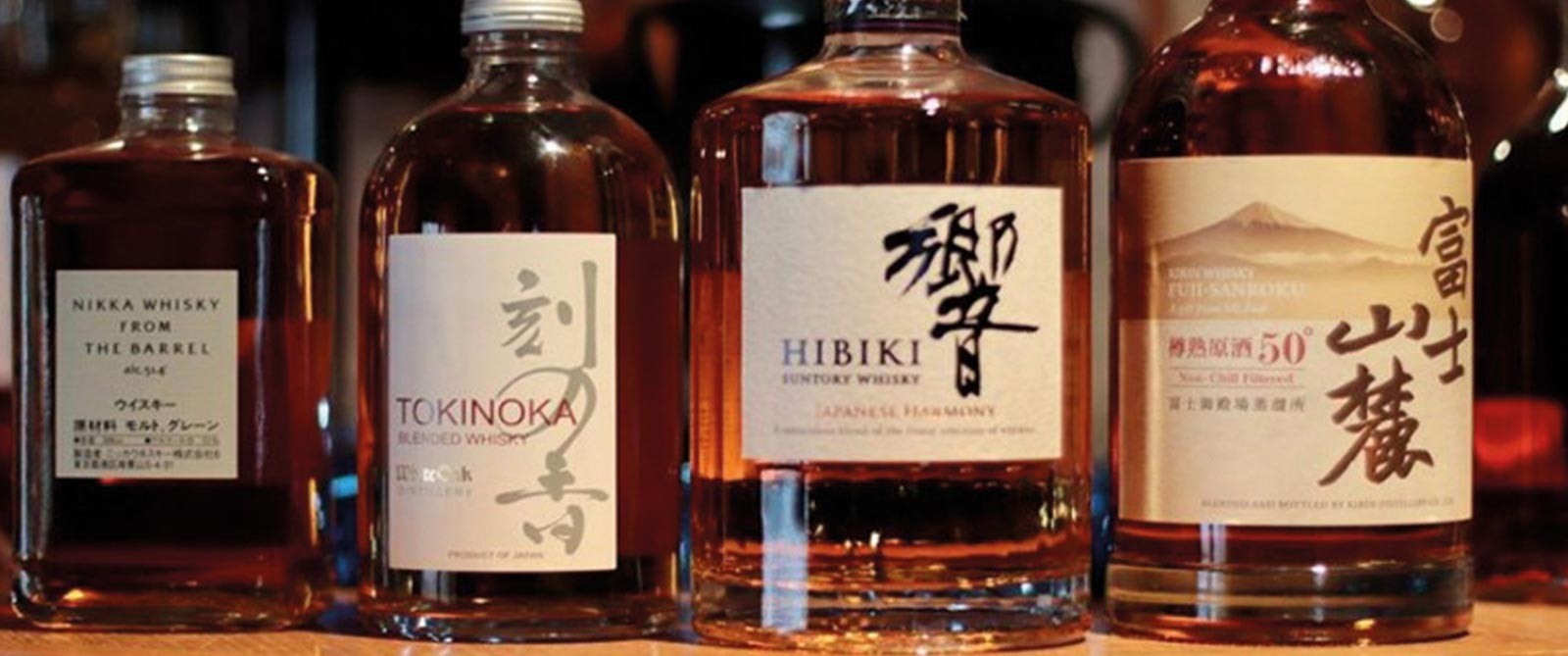
JAPAN TO THE HONOR
Japanese whisky production started around 1870, but the first commercial production took place in 1923 when the country's first distillery, Yamazaki, was created.
Several distilleries produce whisky in Japan. The best known and most important are Suntory and Nikka.
They produce and market both single malt and blends.
For a long time, and because of its history, Japanese whisky was limited to copying as much as possible Scottish whisky. This will was expressed even in the choice of distillery sites in geographical areas similar to Scotland (land and climate). Even though this resemblance has weakened over the years, thanks to the innovations of the Japanese distillers, it persists notably through the production of blends and vattend malt.
In fact, the Japanese use Scottish single malts to produce some of their whiskies assembled through their Scottish distilleries17.
Japanese single malts are increasingly popular around the world. Some of these whiskies even get better grades than their Scottish cousins during blind tastings. This is especially the case of Suntory appointed four times Distiller of the year between 2010 and 2014.
One of the key people in Japanese whisky history is Masataka Taketsuru. He left to study the art of whisky distillation in Scotland in 1918 at the University of Glasgow and in the distilleries of Longmorn, Bo'ness and Hazelburn, and brought this technique back to Japan two years later.
He took part in the creation of the first two Japanese whisky distilleries. He first collaborated with Shinjirō Torii to create the very first Japanese whisky distillery in Yamazaki in 1924 for Kotobukiya, Suntory's ancestor.
In 1934 he founded his own company, Dainipponkajū, which later became Nikka. He set up his distillery in Yoichi on Hokkaidō Island.
Japanese whisky is the fourth most consumed whisky in the world after Scotch whisky, Irish whiskey and American bourbons19.
In Japan, whiskey is eaten dry, with ice cubes (often a ball of ice, it is then called iceball), lying with flat water and ice cubes (mizuwari or with soft water and ice cubes (highball).
Linked products

A symphony of at least ten malt and grain whiskies, aged in five different casks from the Yamazaki, Hakushu and Chita distilleries. Delicately balanced, smooth and...
- Rupture de stock
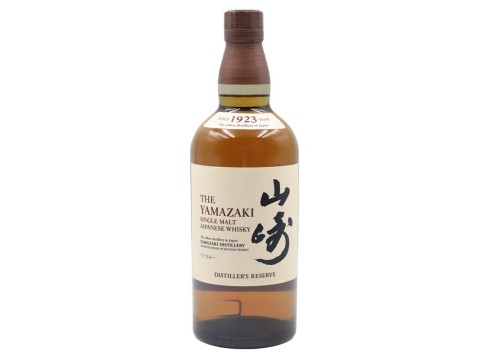
The Yamazaki Distiller's Reserve
Yamazaki Distiller's Reserve is a very smooth whisky. The signature fruity aromas of the Yamazaki distillery, including strawberry, cherry and white peach, are com...
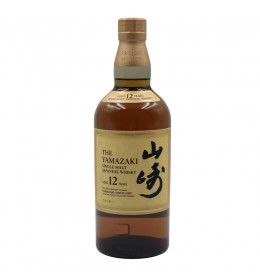
Made by Japan's oldest distillery, Yamazaki single malt is the perfect combination of Scottish craftsmanship and Japanese refinement. This 12 year old is no except...
- Rupture de stock